

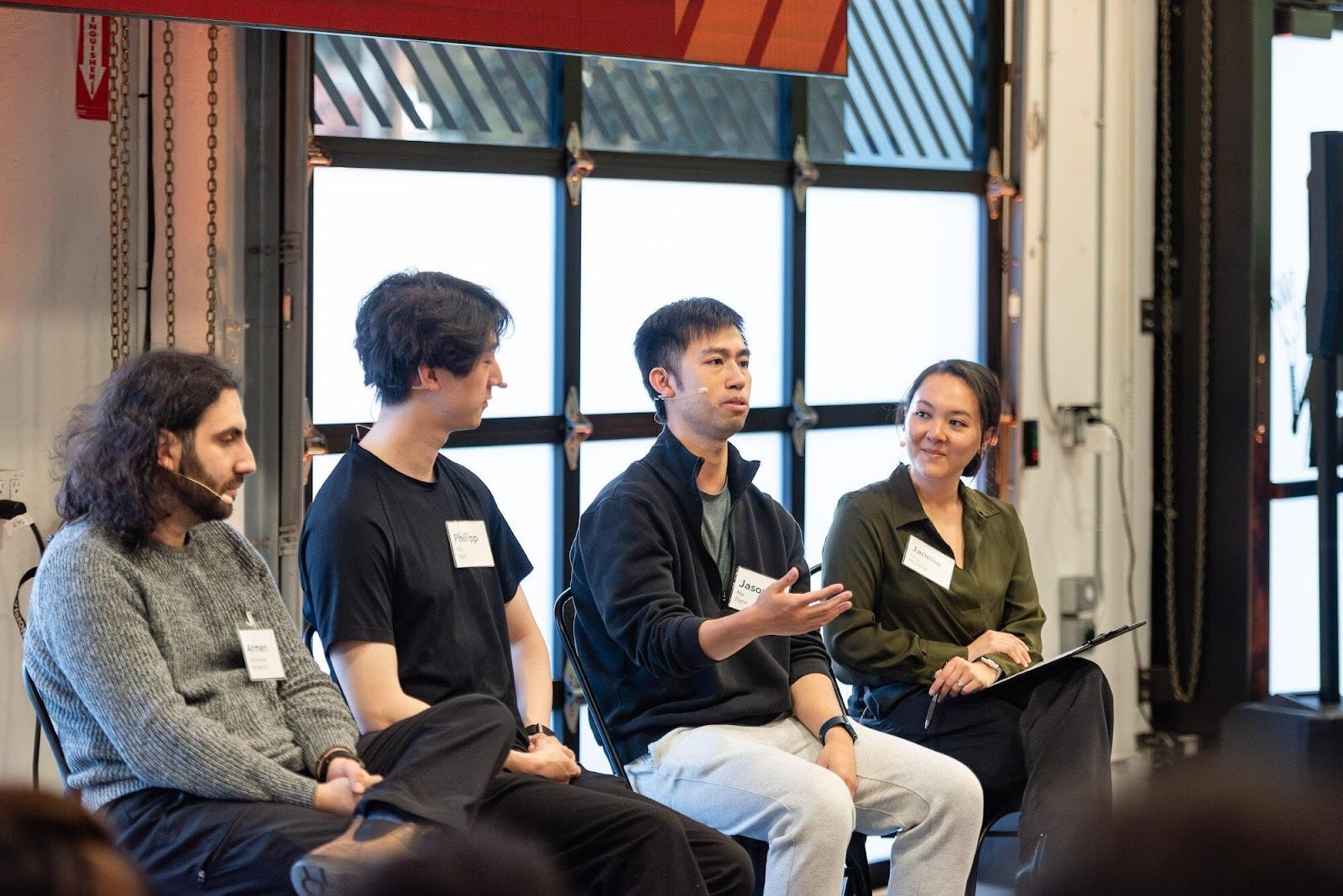
Physical AI took center stage last week, from NVIDIA’s GTC (complete with an Olaf robot cameo at Jensen’s keynote) to Bessemer’s Robotics Day to Unitree’s IPO news. The momentum didn’t stop there: this week brought news of Amazon’s Fauna Robotics acquisition and the appearance of a Figure humanoid at the White House!
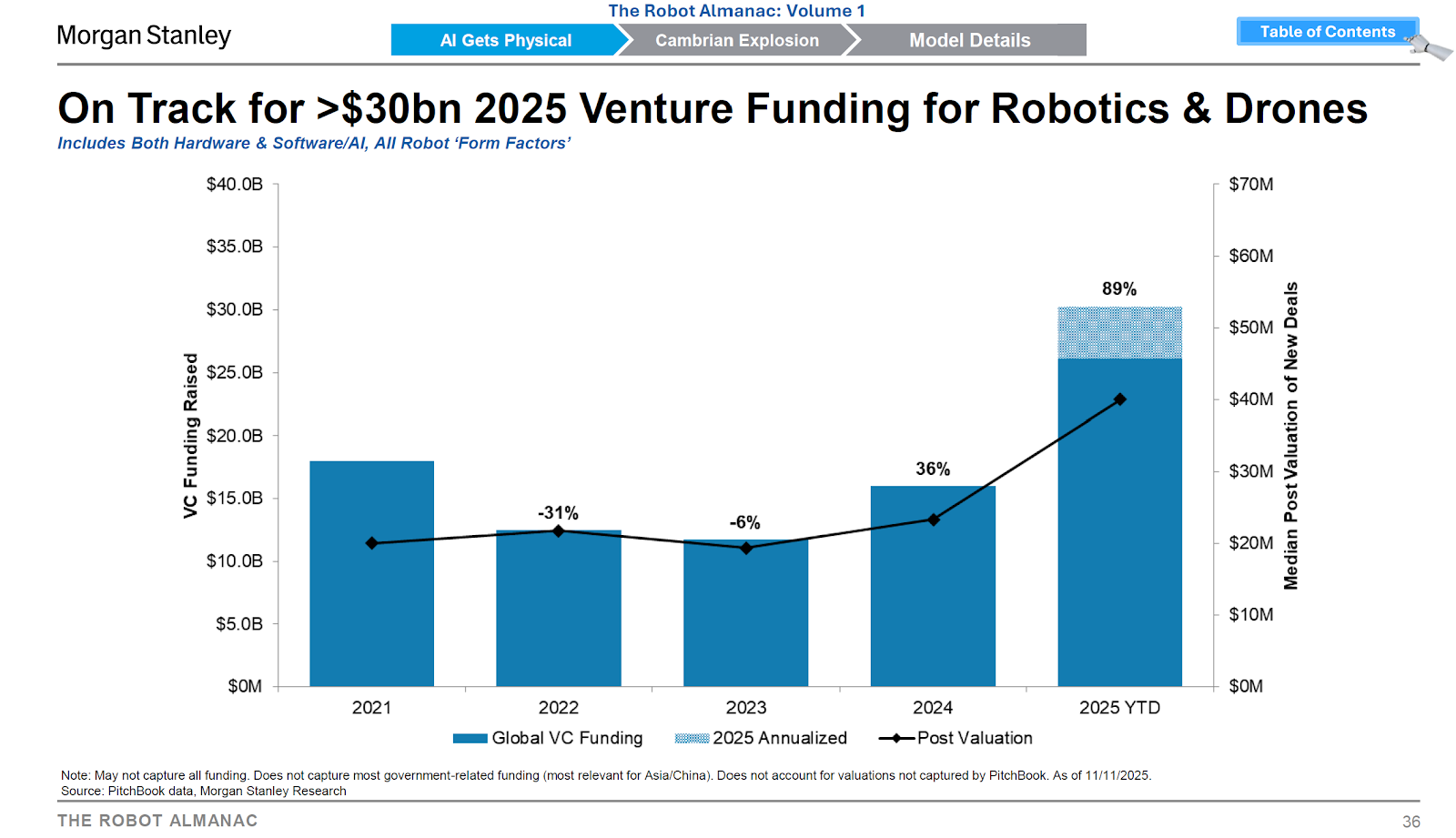
Physical AI is certainly having its moment and VC funding in the sector has seen a meaningful uptick recently (chart above). As I wrote in my 2026 predictions piece, the embodied AI race could prove more intense and consequential than the LLM wars.
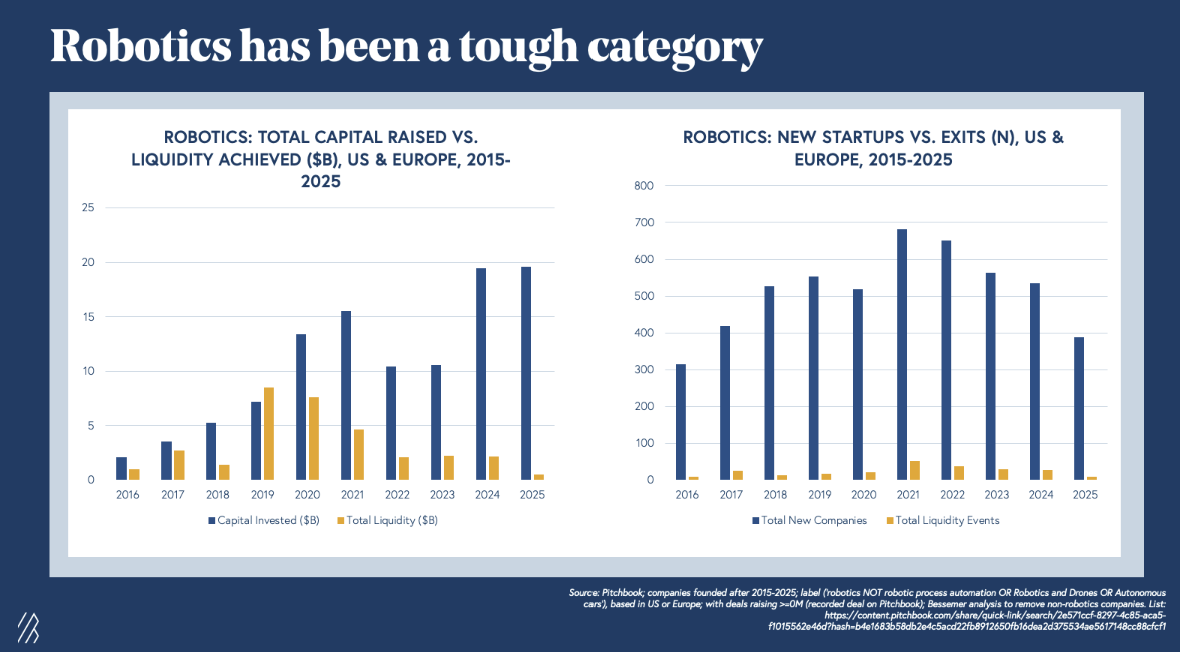
But robotics hasn’t always been a “hot” category and many investors still carry scar tissue from prior cycles (chart above). So what’s actually different this time? The key shift is that today’s Physical AI catalysts aren’t unfolding sequentially. They’re instead compounding in parallel, creating a convergence that makes this moment feel fundamentally unlike those that came before:
Physical AI foundation models are advancing rapidly: A new class of AI models purpose-built for the physical world is emerging, from vision-language-action models to autonomous driving models to world models (check out Chris Paxton’s interesting deep dive on this topic). In effect, we’re now seeing the beginnings of a “foundation model layer” for robotics, potentially unlocking a “robotics brain” capable of thinking and reasoning across tasks, environments, and form factors. This is a step-function improvement from traditional approaches that relied on brittle rules or narrowly-trained and ungeneralizable policies.
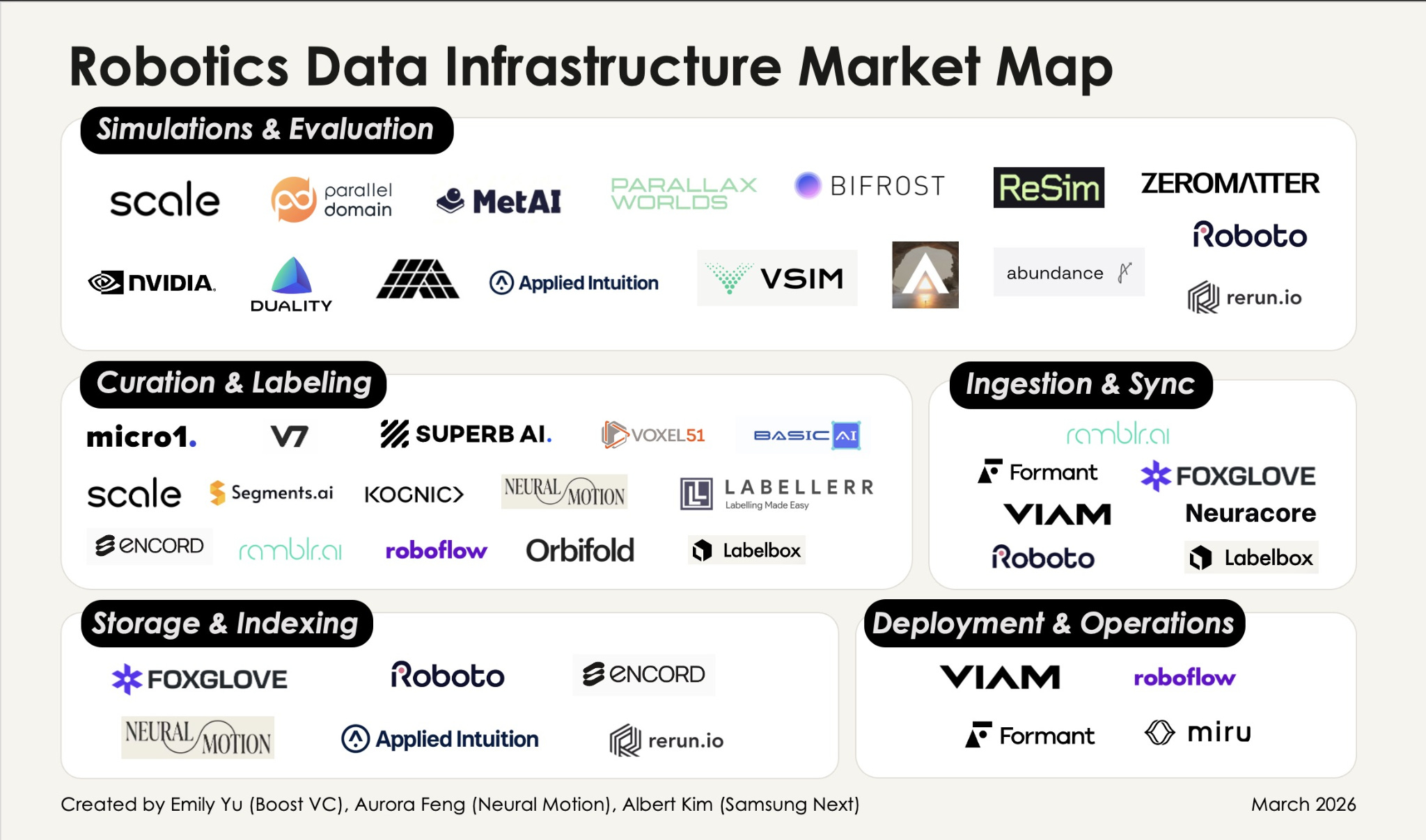
Data bottleneck is easing: For years, the limiting factor on the robotics frontier wasn’t intelligence; it was data. Unlike LLMs, the data required to train robot models (e.g. motor skills, pressure, manipulation, etc.) can’t just be scrapped from the internet. Physical AI data is unstructured, multimodal, and historically expensive and slow to collect via real-world interactions. However, these data constraints are now abating due to advances in scalable teleoperation, simulation-first approaches, egocentric video, world models, and haptics. Additionally, techniques and tooling are also maturing rapidly (exhibit below). The data problem isn’t fully solved yet, but it’s no longer the wall it once was.
Inference infrastructure is meeting the moment: Robotic intelligence is only useful if a robot can act on it in real time. Here, breakthroughs in edge inference, such as more efficient on-device compute that can run complex models locally and in real-time, are closing the gap. This type of inference is critical for physical AI systems where latency and connectivity could impose hard constraints, particularly in environments like factory floors or construction sites where immediate action is required.
Hardware is ready to scale and getting cheaper: Crucially, hardware improvements, commoditization, and falling cost curves are making scalable, versatile robots economically viable. This is a necessary unlock to turn promising demos into deployable products.
Macroeconomic tailwinds: These technological shifts are converging in a favorable macro environment. Labor shortages, supply chain fragility, and geopolitical pressure around issues like reshoring have shifted automation from a future bet to a present and strategic necessity. At the same time, autonomy is increasingly becoming mainstream in public consciousness, from self-driving cars on our roads to humanoid robots serving customers in restaurants.
Talent inflows: Perhaps the most telling signal of all is talent. Across Big Tech and startups, a wave of researchers, developers, and founders are now moving into the robotics field in numbers reminiscent of the early days of the LLM boom:
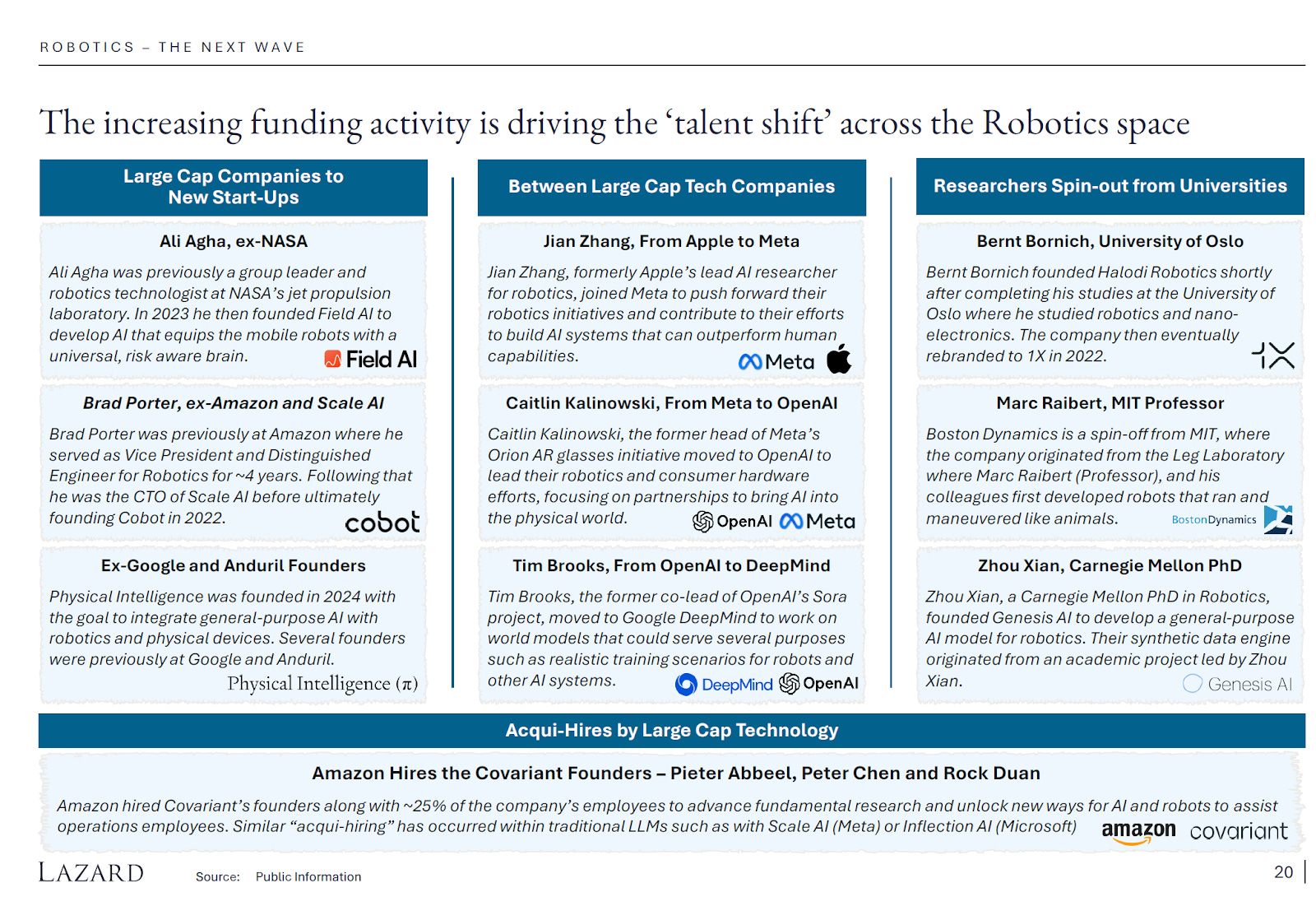
While recent progress in the field has been remarkable, the bigger debate has shifted to timing: when will Physical AI have its “ChatGPT moment”? We’re not quite yet at the point of true generalizability across real-world tasks at scale, but with multiple catalysts compounding in parallel, the trajectory is becoming clearer that the inflection point may be closer than we expect.
Came across this a bit late, but glad I did. The framing of six catalysts converging simultaneously rather than sequentially really captures why this moment feels different from previous robotics cycles.
One thing I'd add from what I'm seeing: even after models become capable enough for real-world use, deploying them at enterprise scale introduces an entirely different set of challenges—validation across heterogeneous environments, safety, compliance, fleet reliability, and operational governance. The research problem and the deployment problem are almost two separate battles.
We saw a similar pattern in autonomous driving. Once the models became good enough, the harder work shifted to making them trustworthy in production through safety certification, edge-case management, deployment governance, fleet operations, and building the feedback loops needed to learn from failures occurring in the field.
Much of the energy in Physical AI today is still focused on model capability. The operational layer—and the ability to continuously improve deployed systems based on real-world behavior—feels like the next frontier.